September 24, 2008

More on RezWorld

Immersive video game aims to revitalize American Indian languagesIndian kids will soon have a Super Mario-like character of their own to guide through an array of digital puzzles and game landscapes. But instead of a character who looks like the mustached Italian plumber, made popular from appearances in dozens of Nintendo offerings, a new video game created by a Native-owned company will feature tribal characters speaking a variety of Indian languages.

The game, called RezWorld, is billed as the first fully immersive 3-D interactive video game that can help young Indians learn to speak their own languages via a unique speech recognition component.

“We’re all about teaching Native language in a context that really engages our young people,” said Don Thornton, the Cherokee owner of the California-based Thornton Media, which has led the way in creating the game’s prototype.
Comment:  For more on the subject, see Video Game Teaches Language.

Declaration for Anishinaabemowin

Putting Anishinaabemowin firstAn alliance of Anishinaabe tribal leaders and citizens from Canada has put forth a declaration asserting that Anishinaabemowin is their primary language.

The declaration, which was approved by the Walpole Island First Nation of the Bkejwanong Territory in August, says that immersion and fluency in the Anishinaabemowin language is a long-term goal for all of its citizens.

September 18, 2008

Smithsonian has stuff

Drafting a FutureDuring his getting-acquainted tour of the Smithsonian, G. Wayne Clough, the institution's new secretary, was stopped in his tracks by a group of researchers poring over pages of "endangered" languages.

Clough sat there in the reading room of the National Anthropological Archives in Suitland, one of the many outposts of the Smithsonian empire, and heard how experts at the institution have been collecting languages since before the Smithsonian was the Smithsonian.

This group handed him some cards. He undid the white ribbon and found slips with words from the Poosepatuck Nation. Clough recalled he was a little flabbergasted when Robert Leopold told him these were 19th-century copies of a set that Thomas Jefferson had written on a trip to Long Island in 1791. And Clough (pronounced "cluff") said he was even more impressed when he visited a laboratory and saw that 8,000 pages of Cherokee had been digitized and shared with North Carolina tribe members who wanted to teach their children the language.

August 17, 2008

Hualapai language camps

Language camps help tribes keep languages aliveAbout 80 youngsters are camped in tents for the program at Hualapai Mountain Park.

They rise at 5 a.m. for a hike, followed by language sessions. One "master" uses pantomime to teach a Native game similar to street hockey, then asks kids to describe the actions in Pai terms. Others teach how to make arrows, gourd rattles and a drink from sumac berries.
And:Because language frames the way a person looks upon the world, Watahomigie said, its demise also threatens a tribe's values, traditions and religion.

That reality is magnified by the dominance of pop culture among kids.

"A lot of these kids here, they don't even think they're Indians. They're like everyone else," she said. "We have a lot of gangs, a lot of drug abuse, right now. Much of that is because children don't have a good self-concept. It's important for them to be proud of who they are, to respect themselves, to understand that they are a unique people but also part of a whole."

Nearby, two girls share an iPod. They appear to be ignoring their pottery instructor, but it turns out that the music in their ears comes from a traditional Hualapai singer.

August 14, 2008

Video game teaches language

RezWorld™--The 3D Interactive Video Game that teaches YOUR Native languageThornton Media, Inc., the leaders in "Language tools for Indian Country", presents RezWorld™, the first fully-immersive 3-D Video Game that teaches Native languages.

The game teaches spoken language and cultural knowledge. Students learn by playing fun, immersive 3D video games that simulate real life social communications. It involves "intelligent virtual humans" that recognize the trainee's speech, gestures and social behavior.

The technology was developed by academic scientists and has been used successfully by language learners. Extensive testing by third-party researchers measured positive learning results (May 2007).

August 04, 2008

Paid to speak Oneida

Saving Oneida language becomes a full time jobIndian tribes across the country are taking steps to preserve their native languages. The Oneida Indian Nation of New York has made it a full-time job, paying tribal members what they would earn in other jobs to immerse themselves in the nation's spoken word.

"We've had language programs here for a long time," said Sheri Beglen, a teacher in the Oneida's program. "But they were once a week for adults, or a half-hour after school for kids. You just can't learn a language one day a week.

"To learn a language, you have to hear it, use it constantly," said Beglen, who was among the first eight graduates of the Oneida program, now in its fourth year.

Gerald Hill, president of the Indigenous Language Institute in Santa Fe, N.M., said while virtually all the more than 300 recognized American Indian tribes have some type of language program, they vary dramatically in approach and effectiveness. Hill said he was unaware of any other tribes paying members to learn the language as a full-time job.

July 30, 2008

Rediscovering the Navajo Language

Putting a language into perspective

New Mexico first state to adopt Navajo textbookState officials formally adopted Yazzie's book, Diné Bizaad Binahoo'ahh, or Rediscovering the Navajo Language, on Tuesday in Santa Fe. While other books on Navajo language exist, state officials say New Mexico is the first to adopt a Navajo textbook for use in the public education system.

About 10 school districts in New Mexico provide Navajo language instruction. Out of seven American Indian languages that were taught in the public school system during the 2006-07 school year, 5,024 students were learning Navajo.
And:School districts in New Mexico, as well as U.S. Bureau of Indian Affairs schools, can review Yazzie's book and decide whether to use it starting in the 2009-10 school year. The book will be accompanied by a compact disc with the voices of Yazzie and her brother, Berlyn Yazzie, a former educator and administrator on the Navajo Nation.

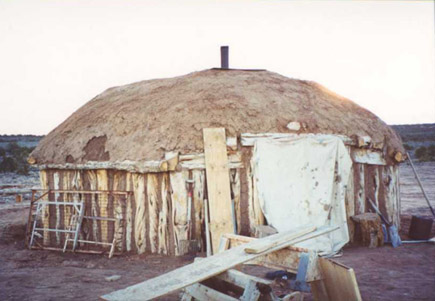
In the Navajo culture, certain topics—such as how to build a hogan or cradle board and how to care for cattle and horses—should be addressed by men. Other topics, including the preparation of food, clothing and caring for children, should be addressed by women.
And:Each chapter of the book, which Yazzie said is suitable for students of all ages, begins with a cultural lesson and guides readers through verbs, sentence construction, clanship, clothing, formal education, telling time the Navajo way, the reservation, Navajo teachings, corn fields, livestock, textures, shapes and the Navajo government.

It also includes pictures of people who have lived on the Navajo reservation, which stretches into New Mexico, Utah and Arizona. Yazzie said she looks forward to students sharing the book with Navajo elders and "pretty soon conversation will be sparking around fires."

July 21, 2008

Diné summer language camp

Elementary students participate in Dine summer language campElementary school children in Bloomfield are breaking away from their TVs this summer to learn about the history and culture of the Navajo people—in a class conducted entirely in the Navajo language.

The Diné Language Immersion Program, for students in kindergarten through sixth grade, runs from July 7-30 at Central Primary School in Bloomfield. The course lasts all morning, from 8:30 until noon, Monday through Thursday.

"I was just watching TV all day," said 10-year-old Zachary Augustine, referring to his summer before the class and why he decided to attend.

July 10, 2008

Ojibwa songs as teaching tools

Native American language classes aren't just talk

Heritage is at the heart of the lessonsHis songs don't make the American Top 40. Instead they have a more useful purpose: To help keep children of American Indian descent connected with the language of their heritage.

Taylor, a Walpole Island resident whose Ojibwa name is Kaangaadese, uses songs he writes as part of a class he teaches in American Indian language Wednesday nights at Algonac Community Center.

"I like to teach every day language using native language songs," Taylor said. "It is a good teaching tool."

July 09, 2008

Inuktitut for babies

Labrador Inuit struggle to save languageNunatsiavut, the governing body of the Labrador Inuit, will begin work on a 50-year plan to save its vanishing language, at a conference starting Tuesday in Nain.

Nunatsiavut officials will look at expanding programs, such as the Language Nest founded in 2001 in Hopedale, to expose babies to the Inuktitut language.
A bit on how the Language Nest works:Doris Boas and her son Cole, 2, used the small classroom in the Nunatsiavut Health Centre for the Language Nest to learn Inuktitut together from a computer program. Boas said although her family spoke the language, she never learned.

"My parents were fluent and I wasn't taught," Boas said. "It's sad because in the past, it was just natural for it to be said; my parents grew up knowing just Inuktitut, and for it to come this far, to almost losing it, it's sad," Boas said.

She now hopes to learn more, along with her son.

Agnes Able, who teaches at the Language Nest, said she's heard a lot of first words in Inuktitut from the babies and from their parents.

However, she said it's often hard for parents to keep up the language at home, once they finish the two-year program in the classroom.

June 26, 2008

Blackfeet word translations

Blackfeet Language Institute aims at integrating Blackfeet language into school curriculaThe Blackfeet Language Institute was held June 16-18 at the Blackfeet Head Start Multipurpose Room in Browning. The Institute was sponsored through Browning Public Schools' Blackfeet Native American Studies Department, and its main purpose was to develop Blackfeet word translations for classroom use.

A large group of elders, students and educators met June 16-18 a the Blackfeet Early Childhood Center to discuss ways and means of integrating the Blackfeet language into local school curricula.

Terminology in the areas of math, reading, music, technology and science was developed. Among those topics, the hardest content areas to develop were math and music because the Blackfeet language is descriptive so the translations were a bit longer.

June 17, 2008

Emergency language meeting

American Indians work to preserve their languagesIn the Lakota language, a single word expresses the awe and connectedness with nature that some feel looking at the Northern Lights. In Euchee, the language makes no distinction between humans and other animals, though it does differentiate between Euchee people and non-Euchee.

And the Koasati language of Louisiana provides no word for goodbye, since time is seen as more cyclical than linear. To end a conversation, you would say something like: "This was good."
The situation is dire:Can they be saved? Last month, representatives from Indian groups around the country met with linguists and other academics in Philadelphia to see what they could accomplish together.

"We're talking about an emergency situation," said Richard Grounds, a speaker of the Euchee language and co-organiser of the meeting, held at the University of Pennsylvania Museum of Anthropology and Archaeology.
More unique Native concepts:Some languages, for example, have no way to give directions using left and right, because their speakers navigate with a less self-centred view of the world than we do, said Leanne Hinton, a linguist at the University of California, Los Angeles. They think more in terms of local geography.

Ryan Wilson, a member of the Oglala Sioux tribe, said the quality his people value most in a man is something like courage, but includes a degree of independence and perseverance. It has no direct English translation, and with the word may go the idea and the reason it once mattered.

Wilson, who is president of the National Alliance to Save Native Languages, said there was also a word that describes the feeling that you cannot live without someone. It is similar to love, but something is lost in that translation.

June 14, 2008

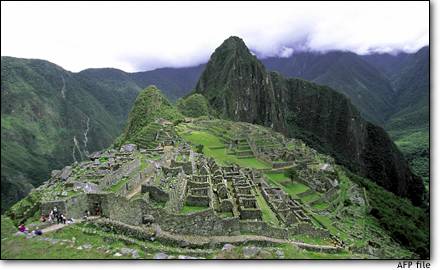
Dream of preserving Quechua

Scholar's not-impossible dream:  To preserve language of the Incas

Demetrio Tupac Yupanqui's translation of "Don Quixote" into Quechua is a landmark in reviving the indigenous tongue.Since the Spanish conquest, important writing in Quechua has emerged, but linguists and Quechua speakers hope that the new version of "Don Quixote" will be a step toward forming a public culture in the language, through Quechua magazines, television and books, that will keep its speakers engaged with the wider world.

After centuries of retreat in the Andes, Tupac Yupanqui's efforts in fortifying Quechua, through teaching and translating, are being complemented by various other ventures.

Microsoft has released translations of its software in Quechua, recognizing the importance of 5 million or so speakers of the language in Peru and millions elsewhere in the Andes, mainly in Bolivia and Ecuador. Not to be outdone, Google has a version of its search engine in Quechua, even if some linguists say that these projects were carried out more for corporate image polishing than for practical reasons.

The workings of Andean democracy are also reminding the world of Quechua's importance. The government of President Evo Morales of Bolivia, for instance, is trying to make fluency in Quechua or another indigenous language mandatory in the civil service.

June 12, 2008

Tulalip worships in Lushootseed

Mass in ancient language celebrates blending of culture and faithWorshippers called, "Peace be with you," and sang, "Lord, send out your spirit and renew the face of the Earth." That was in English.

Then, they struck hand-painted drums made from stretched animal hide. Rhythmic tribal songs in Lushootseed filled the church.

Virginia Jones, 22, read scripture from the New Testament in Lushootseed while dozens of worshippers followed along with English translations in their service books.

Blessings were called out in Lushootseed while Dario MeGuire, 15, played a hand-carved flute. Archbishop Alex Brunett, on hand for the occasion, celebrated the marriage of tribal culture and Catholic faith.

June 08, 2008

"Duck, duck, goose" in Ojibwe

Tribe strives to preserve Ojibwe languageEkdahl, who stepped in following White Pigeon's resignation, said the Tribe received grants from the Native American/Native Hawaiian Museum Services Program of the Institute of Museum and Library Services for their language documentation project.

"The grant allows for the creation of immersion opportunities by the Anishinaabemowin Club," Ekdahl said.

The club hosts gatherings where people are required to speak in Ojibwe during meal and social situations. Instructional cards were created to generate dialogue.

"We also have a Little Language Warrior Club for 3- to 7-year-olds," Ekdahl said. "The program targets young children and parents."

Ekdahl said the project work has created tools to teach young children, including board games, Bingo and charades translated into the Ojibwe language, which are used during the immersion programs.

"We teach them how to play ‘duck, duck, goose' in the language," Ekdahl said. "The parents have to participate.

June 07, 2008

"Breath of Life" conference

Berkeley researchers go global to document endangered languagesInterest by UC Berkeley students in the documentation of endangered languages and in making the information available to native communities seems to have "taken on a new life," Hinton said.

Technology is at least partially responsible for helping to stimulate this renewed interest, she said, with more and more language archives going online and becoming available to interested parties virtually wherever they may be.

The Breath of Life work is aimed at revitalization, whereas the student research is aimed at documentation of still-healthy, if endangered, languages, said Sharon Inkelas, chair of UC Berkeley's linguistics department and professor of linguistics. The June 8-14 conference and the faculty and student fieldwork represent often complementary research at different stages of the lifespan of a language, she said.
An example of the work being done:Andrew Garrett, a UC Berkeley linguistics professor, is known for his ongoing work documenting California Indian languages. He is running a project that is documenting the Yurok language, developing an archive of Yurok texts and audio recordings, and establishing language resources for the Yurok community. Garrett and his students also have worked with Yurok elders on language teaching. Garrett is creating an online multi-media Hupa language dictionary and documentation and doing related research on Northern Paiute dialects in California and Nevada.Breath of Life for California's native languagesLeanne Hinton, UC Berkeley professor emeritus of linguistics, co-founder of the June 8-14 "Breath of Life" conference and author of the "How to Keep Your Language Alive" (2002) handbook, said that a key goal of the conference is to prepare participants to take their languages home and to help turn learning native languages--as a very first language--into a fundamental feature of Indian childhood.

"The school is great for language learning, but if a community really wants its language to be alive, it has to be using it at home," Hinton said. "The tribes are making progress, and there are people who are teaching it to kids at home."

Home instruction helps children to bond emotionally with their language, according to Hinton, whereas classroom learning reflects a more intellectual and dry approach.

June 01, 2008

Documentary inspires Ioway

Native tongue

Lost language comes to life on screen in new movie[T]ribal members are seeing a resurgence in interest in their Iowa roots—and residents of Iowa are rediscovering an interest in the tribe—thanks to a new documentary featuring the culture of a people struggling to maintain their heritage through the years.

The title of the film—“Lost Nation: The Ioway”—refers mainly to the fact that the people of Iowa don’t know the history of their state’s name. But it also refers to a bond that has been lost among Ioway people—a bond people such as Goodtracks hope to rediscover.

May 23, 2008

Scrambling to save tongues

Tribes strive to save native tongues

In the Pacific Northwest, some 40 indigenous languages are at risk of disappearing within a decade.Grass-roots efforts to preserve and teach youngsters native languages are intensifying around the Pacific Northwest and British Columbia as about 40 indigenous tongues are in danger of disappearing within the next decade.

Native leaders are compiling dictionaries, drafting lesson plans, and scrambling to save what scraps of language they can before the last of the fluent elders dies. In the case of Kiksht, a language spoken for centuries along Oregon's Columbia River, there are two remaining speakers and neither can remember the words for "yawn" or "brown."

May 21, 2008

Video game employs languages

Thornton Media in Banning hopes to keep Native American languages aliveWhat's new: Thornton Media in Banning has developed a video game featuring Native American languages.

Thornton's newest release, "Rez World," is a 3-D video game featuring a virtual Native American reservation where the user interacts with other virtual humans who speak only their native language. It is a proven technology and has been shown to be an effective tool in third-party testing with more than 20,000 students, Thornton said.