July 09, 2008

Inuktitut for babies

Labrador Inuit struggle to save languageNunatsiavut, the governing body of the Labrador Inuit, will begin work on a 50-year plan to save its vanishing language, at a conference starting Tuesday in Nain.

Nunatsiavut officials will look at expanding programs, such as the Language Nest founded in 2001 in Hopedale, to expose babies to the Inuktitut language.
A bit on how the Language Nest works:Doris Boas and her son Cole, 2, used the small classroom in the Nunatsiavut Health Centre for the Language Nest to learn Inuktitut together from a computer program. Boas said although her family spoke the language, she never learned.

"My parents were fluent and I wasn't taught," Boas said. "It's sad because in the past, it was just natural for it to be said; my parents grew up knowing just Inuktitut, and for it to come this far, to almost losing it, it's sad," Boas said.

She now hopes to learn more, along with her son.

Agnes Able, who teaches at the Language Nest, said she's heard a lot of first words in Inuktitut from the babies and from their parents.

However, she said it's often hard for parents to keep up the language at home, once they finish the two-year program in the classroom.

June 26, 2008

Blackfeet word translations

Blackfeet Language Institute aims at integrating Blackfeet language into school curriculaThe Blackfeet Language Institute was held June 16-18 at the Blackfeet Head Start Multipurpose Room in Browning. The Institute was sponsored through Browning Public Schools' Blackfeet Native American Studies Department, and its main purpose was to develop Blackfeet word translations for classroom use.

A large group of elders, students and educators met June 16-18 a the Blackfeet Early Childhood Center to discuss ways and means of integrating the Blackfeet language into local school curricula.

Terminology in the areas of math, reading, music, technology and science was developed. Among those topics, the hardest content areas to develop were math and music because the Blackfeet language is descriptive so the translations were a bit longer.

June 17, 2008

Emergency language meeting

American Indians work to preserve their languagesIn the Lakota language, a single word expresses the awe and connectedness with nature that some feel looking at the Northern Lights. In Euchee, the language makes no distinction between humans and other animals, though it does differentiate between Euchee people and non-Euchee.

And the Koasati language of Louisiana provides no word for goodbye, since time is seen as more cyclical than linear. To end a conversation, you would say something like: "This was good."
The situation is dire:Can they be saved? Last month, representatives from Indian groups around the country met with linguists and other academics in Philadelphia to see what they could accomplish together.

"We're talking about an emergency situation," said Richard Grounds, a speaker of the Euchee language and co-organiser of the meeting, held at the University of Pennsylvania Museum of Anthropology and Archaeology.
More unique Native concepts:Some languages, for example, have no way to give directions using left and right, because their speakers navigate with a less self-centred view of the world than we do, said Leanne Hinton, a linguist at the University of California, Los Angeles. They think more in terms of local geography.

Ryan Wilson, a member of the Oglala Sioux tribe, said the quality his people value most in a man is something like courage, but includes a degree of independence and perseverance. It has no direct English translation, and with the word may go the idea and the reason it once mattered.

Wilson, who is president of the National Alliance to Save Native Languages, said there was also a word that describes the feeling that you cannot live without someone. It is similar to love, but something is lost in that translation.

June 14, 2008

Dream of preserving Quechua

Scholar's not-impossible dream:  To preserve language of the Incas

Demetrio Tupac Yupanqui's translation of "Don Quixote" into Quechua is a landmark in reviving the indigenous tongue.Since the Spanish conquest, important writing in Quechua has emerged, but linguists and Quechua speakers hope that the new version of "Don Quixote" will be a step toward forming a public culture in the language, through Quechua magazines, television and books, that will keep its speakers engaged with the wider world.

After centuries of retreat in the Andes, Tupac Yupanqui's efforts in fortifying Quechua, through teaching and translating, are being complemented by various other ventures.

Microsoft has released translations of its software in Quechua, recognizing the importance of 5 million or so speakers of the language in Peru and millions elsewhere in the Andes, mainly in Bolivia and Ecuador. Not to be outdone, Google has a version of its search engine in Quechua, even if some linguists say that these projects were carried out more for corporate image polishing than for practical reasons.

The workings of Andean democracy are also reminding the world of Quechua's importance. The government of President Evo Morales of Bolivia, for instance, is trying to make fluency in Quechua or another indigenous language mandatory in the civil service.

June 12, 2008

Tulalip worships in Lushootseed

Mass in ancient language celebrates blending of culture and faithWorshippers called, "Peace be with you," and sang, "Lord, send out your spirit and renew the face of the Earth." That was in English.

Then, they struck hand-painted drums made from stretched animal hide. Rhythmic tribal songs in Lushootseed filled the church.

Virginia Jones, 22, read scripture from the New Testament in Lushootseed while dozens of worshippers followed along with English translations in their service books.

Blessings were called out in Lushootseed while Dario MeGuire, 15, played a hand-carved flute. Archbishop Alex Brunett, on hand for the occasion, celebrated the marriage of tribal culture and Catholic faith.

June 08, 2008

"Duck, duck, goose" in Ojibwe

Tribe strives to preserve Ojibwe languageEkdahl, who stepped in following White Pigeon's resignation, said the Tribe received grants from the Native American/Native Hawaiian Museum Services Program of the Institute of Museum and Library Services for their language documentation project.

"The grant allows for the creation of immersion opportunities by the Anishinaabemowin Club," Ekdahl said.

The club hosts gatherings where people are required to speak in Ojibwe during meal and social situations. Instructional cards were created to generate dialogue.

"We also have a Little Language Warrior Club for 3- to 7-year-olds," Ekdahl said. "The program targets young children and parents."

Ekdahl said the project work has created tools to teach young children, including board games, Bingo and charades translated into the Ojibwe language, which are used during the immersion programs.

"We teach them how to play ‘duck, duck, goose' in the language," Ekdahl said. "The parents have to participate.

June 07, 2008

"Breath of Life" conference

Berkeley researchers go global to document endangered languagesInterest by UC Berkeley students in the documentation of endangered languages and in making the information available to native communities seems to have "taken on a new life," Hinton said.

Technology is at least partially responsible for helping to stimulate this renewed interest, she said, with more and more language archives going online and becoming available to interested parties virtually wherever they may be.

The Breath of Life work is aimed at revitalization, whereas the student research is aimed at documentation of still-healthy, if endangered, languages, said Sharon Inkelas, chair of UC Berkeley's linguistics department and professor of linguistics. The June 8-14 conference and the faculty and student fieldwork represent often complementary research at different stages of the lifespan of a language, she said.
An example of the work being done:Andrew Garrett, a UC Berkeley linguistics professor, is known for his ongoing work documenting California Indian languages. He is running a project that is documenting the Yurok language, developing an archive of Yurok texts and audio recordings, and establishing language resources for the Yurok community. Garrett and his students also have worked with Yurok elders on language teaching. Garrett is creating an online multi-media Hupa language dictionary and documentation and doing related research on Northern Paiute dialects in California and Nevada.Breath of Life for California's native languagesLeanne Hinton, UC Berkeley professor emeritus of linguistics, co-founder of the June 8-14 "Breath of Life" conference and author of the "How to Keep Your Language Alive" (2002) handbook, said that a key goal of the conference is to prepare participants to take their languages home and to help turn learning native languages--as a very first language--into a fundamental feature of Indian childhood.

"The school is great for language learning, but if a community really wants its language to be alive, it has to be using it at home," Hinton said. "The tribes are making progress, and there are people who are teaching it to kids at home."

Home instruction helps children to bond emotionally with their language, according to Hinton, whereas classroom learning reflects a more intellectual and dry approach.

June 01, 2008

Documentary inspires Ioway

Native tongue

Lost language comes to life on screen in new movie[T]ribal members are seeing a resurgence in interest in their Iowa roots—and residents of Iowa are rediscovering an interest in the tribe—thanks to a new documentary featuring the culture of a people struggling to maintain their heritage through the years.

The title of the film—“Lost Nation: The Ioway”—refers mainly to the fact that the people of Iowa don’t know the history of their state’s name. But it also refers to a bond that has been lost among Ioway people—a bond people such as Goodtracks hope to rediscover.

May 23, 2008

Scrambling to save tongues

Tribes strive to save native tongues

In the Pacific Northwest, some 40 indigenous languages are at risk of disappearing within a decade.Grass-roots efforts to preserve and teach youngsters native languages are intensifying around the Pacific Northwest and British Columbia as about 40 indigenous tongues are in danger of disappearing within the next decade.

Native leaders are compiling dictionaries, drafting lesson plans, and scrambling to save what scraps of language they can before the last of the fluent elders dies. In the case of Kiksht, a language spoken for centuries along Oregon's Columbia River, there are two remaining speakers and neither can remember the words for "yawn" or "brown."

May 21, 2008

Video game employs languages

Thornton Media in Banning hopes to keep Native American languages aliveWhat's new: Thornton Media in Banning has developed a video game featuring Native American languages.

Thornton's newest release, "Rez World," is a 3-D video game featuring a virtual Native American reservation where the user interacts with other virtual humans who speak only their native language. It is a proven technology and has been shown to be an effective tool in third-party testing with more than 20,000 students, Thornton said.

May 18, 2008

Salish Language Revitalization Institute

Speaking SalishIn a language immersion school, every object has a label to remind students how to describe the world around them.

So in a sense, the expansion project going on at Nkwusm Salish Language Revitalization Institute here is adding to its dictionary. From a single classroom and hallway kitchen six years ago, Nkwusm now is filling a former bowling alley with white boards, desks, student art and recording equipment.
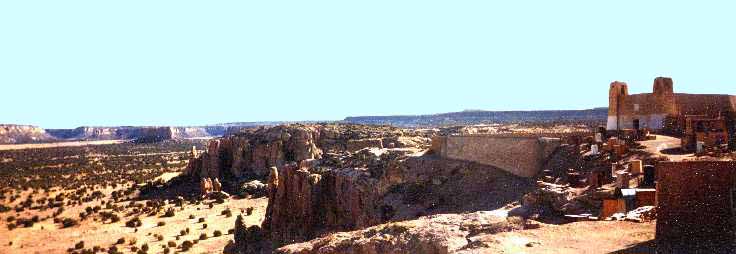
From that time just six years ago when only a couple children showed up for class, Nkwusm now has 39 regular students in preschool through high school grades. It's divided into three multi-age classes, each with a certified teacher, a fluent Salish speaker and a teacher's aide.
And:[T]he Salish language is everywhere, from the gathering songs the children sing in the morning to the labels on every counter, fixture and picture in the building. When Salish elders and language specialists Pat Pierre and Stephen Small Salmon lead a call-and-response exercise, the children yell with gusto.

May 08, 2008

6th annual Oklahoma language fair

Maintaining identity

Youth fair shows validity of Native language in OklahomaRare are the opportunities to hear young Native people speak and sing in their traditional languages in Oklahoma. But when these Native students in grades pre-K through 12 can come under one roof, speaking and singing in languages as diverse as Creek, Choctaw, Kiowa, Cherokee, Comanche, Otoe or Apache, it is a wonderful experience for all involved.

Beginning in 2002, with the Indigenous Language Institute of Santa Fe, N.M., serving as a model, the University of Oklahoma Native American Youth Language Fair expected only 80 participants in individual and group speech and song categories. Instead, more than 200 participated in the inaugural event. This year on March 31 and April 1, the seventh annual event grew to include 1,055 pre-registered students and teachers.
Cherokee Nation immersion students excel at language fairCherokee Nation language immersion students recently participated in the sixth annual Oklahoma Native American Youth Language Fair at the Sam Noble Oklahoma Museum of Natural History in Norman.

"Through our language immersion program, we are working diligently to teach future generations our native tongue," said Chad Smith, principal chief of the Cherokee Nation. "The Cherokee language enhances the quality of life of our people and preserves the culture and traditions of our past. The Cherokee Nation is very proud of these young Cherokees and their accomplishments at the language fair."

May 02, 2008

The importance of documenting languages

Tongue ties:  a language bridge across the Bering Strait

A Western Washington University professor has compared native languages in North America to those in Asia and found ties that suggest they come from the same ancestors.Vajda, a professor at Western Washington University in Bellingham, recently demonstrated a convincing kinship between a Siberian language family called Yeniseic and a Native American family called Na-Dene, which includes languages spoken in the Pacific Northwest and the Southwest.

The work also underscores the importance of documenting obscure languages before they die out. Vajda closed his symposium paper with this thought: "Who could have guessed that the ancient words Native American and Native Siberian boarding-school children were punished for speaking aloud just a few short decades ago would prove to wield a power vast enough to reunite entire continents?"

April 29, 2008

Yuman summit at Barona

Tribes aim to revive language

Summit planned at Barona reservationIn recent decades, tribes have taken steps to revitalize their endangered languages by compiling dictionaries, offering classes, encouraging children to speak it at camp and connecting fluent speakers with apprentices in immersion efforts.

Now money from tribal casinos has stepped up those efforts.

Gatherings such as the Yuman summit are key to sharing what works and what doesn't, Ray said.

The gathering is unique because it's driven by Indians, rather than academics, said Leanne Hinton, a linguist at the University of California Berkeley.

April 21, 2008

Samala lives

Ancient Chumash tongue revivedA bound volume of ink and paper is keeping a language alive.

With the unveiling of “Samala-English Dictionary--A Guide to the Samala Language of the Ineseño Chumash People,” the language of the Santa Ynez Band of Chumash Indians has been awakened from half a century of dormancy.
And:The tribe's language program initiative, which includes the dictionary and a group of five Samala apprentices, began in 2003 as a directive of Tribal Chairman Vincent Armenta.

April 12, 2008

Revitalizing Shoshone

Woman will teach Shoshone at UWAs the language coordinator for the Shoshone Tribal Cultural Center on the Wind River Indian Reservation, Teran has been working with tribal elders for almost six years to produce a written and digital-audio dictionary of the Eastern Shoshone language.

In that time she has reconnected with her first tongue, and she has again begun dreaming in Shoshone--a language that is more descriptive, colorful and emotional than English is, she said.

In addition to the dictionary project, which has been a huge undertaking for her and three tribal elders, Teran has also developed an eight-CD audio book for basic Shoshone-language instruction.
Shoshone woman devotes her life to preserving native language
Since 2002, Teran, the Eastern Shoshone language coordinator, has been working with three Shoshone elders on the reservation to compile the most comprehensive phonetic dictionary and audio record of the tribe's language yet assembled.

She has been digitally recording the elders for going on six years now, as they've painstakingly pronounced 14,000-plus words and phrases in a cramped, makeshift recording studio.

She has also been creating and producing a basic multimedia Shoshone language course for schools and tribal members.

Teran said she fell in love with media technology the moment she was introduced to that reel-to-reel recorder, and she now believes it offers the surest way to preserve and help to revive the language.
Elder says reconnection with native tongue could help bring tribal renaissance

March 29, 2008

The Myaamia Project

Miami University helps Miami Tribe reclaim languageKelsey Young--like many other members of the Miami Tribe of Oklahoma--could not understand her tribe's language. The Myaamia Project supported by the tribe and Miami University is changing that--helping the tribe reclaim and keep its language and culture alive.

A long-standing relationship between the Miami tribe and its namesake university helped lead to a tribal initiative in 2001 creating the Myaamia Project to help preserve the language, culture and history of the small, non-reservation tribe. The word Miami is derived from the tribe's original Myaamia name. A conference Saturday at the university in Oxford, about 40 miles northwest of Cincinnati, will highlight the project's latest language revival and educational efforts.

The conference will highlight project efforts such as the April debut of an online version of the Miami dictionary. Myaamia Project Director Daryl Baldwin says the online version will make the dictionary more accessible to tribal members and others and allow people to hear pronunciations.

There also will be a preview of a video showing challenges the small community has faced in reclaiming a language whose last fluent speakers died in the early 1960s.

March 05, 2008

Potawatomis use Phraselator

Technology helps tribe pass on native speechCecelia "Meeks" Jackson is helping revitalize an almost lost language.

Jackson, 85, is one of six people nationwide who fluently speak the Potawatomi language, Sydney Van Zile, director of the Prairie Band Potawatomi Language Center, said Tuesday.

Thanks to advanced technology, Jackson is sharing her knowledge with other members of the Prairie Band Potawatomi Nation through the Phraselator Language Companion, a one-way translator.

February 27, 2008

Recording Alaskan languages

UAF gets $1.2 million to record Native languages

Some are on the verge of extinctionA researcher at the University of Alaska Fairbanks has been awarded $1.2 million by the National Science Foundation to document the endangered languages of Alaska and other areas of the Arctic.

“If it’s ever going to be done, it has got to be done now,” said Michael Krauss, professor emeritus of linguistics at UAF. “Making a record, as much as we can, of a language while it is still there is vital to the future of the language and the people.”

On Jan. 21, Marie Smith Jones died at the age of 89. Her death, Krauss said, marked a “tragic new phase of history” in Alaska because she was the last remaining speaker of Eyak. The language may be extinct, but Krauss will continue his work to document it. The grant, funded from the National Science Foundation, will enable the detailed documentation of Eyak and 10 other languages. A number of linguists will be working with speakers of various languages from across Alaska and the Arctic.

February 22, 2008

Rescuing languages is impossible?

No Tears For Dead TonguesMany hope that we can turn back the tide with programs to revive indigenous languages, but the sad fact is that this will almost never be seriously effective. For an educated English speaker, learning to hold a conversation in French or Spanish isn't too difficult. But learning small, endangered languages is a much tougher business, because they are often as different from European languages as Berik.

I once taught a class of Native Americans their ancestral language in a summer program. This had the positive effect of helping them feel connected to their ancestors, but there was no possible way they were going to be able to converse in the language. Native American languages seem almost designed to frustrate someone who grew up with English. There are sounds it's hard to make unless you were born to them.

February 20, 2008

Crash courses in Quileute

Non-Native teaching Quileute tongue-twisting languageHe hasn't tried to make his students fluent in Quileute.

"We don't know of a single child raised speaking English who has learned a native language in a classroom," Powell said, despite educators' spending $2 billion on such efforts.

"Fluency wasn't one of the alternatives. It just wasn't achievable."

Instead, at the invitation of the Quileute Tribal Council, Powell and Jensen devised a series of intensive courses, four to five weeks long, held twice a year over two years.

The Quileute reached the halfway point of the curriculum last month.

What is emerging is a language of English mingled with Quileute words and phrases—greetings, common comments and "useful terms of various kinds," Powell said.

February 17, 2008

Reclaiming Algonquian languages

Mashantucket Pequots Seek To Reclaim, Preserve Language

Tribe's children are keys to reviving ancient tongue[T]here is an entire field of anthropology and linguistics that specializes in reclaiming indigenous languages. For the fourth time in eight years, those professionals will gather at the Mashantucket Pequot Museum and Research Center, starting Wednesday, to discuss everything from poetic form to developing an Algonquian dictionary.

For the first time, the tribe's children will be involved. Their artwork, featuring animals and the corresponding Pequot word showcased in pastel drawings and on clay tiles, will be on display.

The next major step for both tribes is initiating a major push to teach all tribal members the language. Jones said two dozen members have graduated from a beginner-level language course and several are in advanced-level courses.

The Mohegan tribe has also developed a phrase book and dictionary and is currently putting together language programs for adults and children.

February 16, 2008

Cayuga immersion school

School fights to revive native Canadian language Jamieson is a teacher at the Gaweni:yo High School, part of the same Cayuga language immersion program that also includes Jacobs' kindergarten class, as well as a parallel Mohawk language program.

"I think the language speaks to their spirit," Jamieson said of the 35 pupils at the high school, located about 70 miles (120 km) southwest of the Ontario capital Toronto. "They're able to grasp it and go with it."

While the linguistic knowledge of native speakers like Jamieson is irreplaceable, Gaweni:yo--which means "nice-sounding words"--is helping to slow the erosion of the Cayuga language, and young people are becoming a viable population of fluent speakers.

The most dedicated meet up regularly to chat in Cayuga and practice new words and some even use Cayuga as the primary language at home.

February 07, 2008

Arapaho immersion school

Reviving a dying languageTo save the language, the Council of Elders has completed a strategic plan, and has secured funding, to create a new Arapaho Immersion Grade School, set to open in August.

If the council succeeds in its efforts to revitalize the Arapaho language, new generations of fluent speakers will begin to emerge in a few short years, Redman said. And the language will not only survive, but the Arapaho people will gradually reclaim more of their traditional culture, and become, on the whole, a more vibrant and healthy nation.

The Arapaho Immersion Grade School aims to build upon the foundation laid by the preschool.

The school will teach all standard elementary school subjects, save English, with all instruction and interaction done in Arapaho. Children who attend the school will be effectively immersed in the language for eight hours at a time, every school day.

The students will receive an English education, Redman said--but after school in their homes, with tutors.

If everything goes as planned, the children will be completely fluent in the Arapaho language by the third grade. But the more modest goal set by the council for the first crop of children will be fluency for all students by the time they finish the sixth grade.
Tribe:  Plan follows successful modelsPrevious efforts to revitalize the Arapaho language have largely failed, but the Northern Arapaho Council of Elders believes it has developed a plan that will finally succeed, taking cues from recent, successful language revival programs in Hawaii and New Zealand.

In both cases, the Hawaiian and Maori languages were moribund before revival efforts.

The Northern Arapaho Council of Elders estimates that there are 225--maybe 230--fluent speakers of Arapaho left on the planet. Almost all are over the age of 60, and every time a fluent speaker dies, usually of old age, the number drops by one. The Arapaho language "is now in its 59th minute of the last hour of survival," the Council of Elders wrote recently.

The revival of indigenous languages is a worldwide movement, which has gained significant momentum over the past two decades. A few flourishing programs around the globe have helped establish something of a blueprint for success, the council believes.

Arapahoe School, which last spring completed the first year of a five-year federal grant to create a bilingual, English-Arapaho, program, also took inspiration from the successful Hawaiian and Maori language programs.

February 04, 2008

Utah considers Navajo classes

Utah educators want schools to teach Indians native languagesThe state Board of Education wants to offer classes in American Indian languages to Utah students.

The board is asking the Legislature for $275,000 to fund the classes, which it says have been shown to reduce the achievement gap between white and American Indian students.

"Take a look year after year at low test scores and a 50 percent dropout rate," said state Associate Superintendent Brenda Hales. "We have a whole generation of students we're going to lose if we don't start making immediate attempts to help them."

State test results show Navajo students trail white students by 45 percentage points in language arts, 48 percentage points in math and 57 percentage points in science.

In a San Juan School District pilot program where students were immersed in Navajo language classes, those gaps fell to 15, 23 and 10 percentage points difference, respectively.

February 02, 2008

More on the Odawa class

Odawa language course part of school's curriculumSusan Jacobs, principal at Harbor Springs High School, said she had recognized the need for such a course for several years.

"Native American students do not feel part of our system because very little about the system honors who they are," she wrote in a 2006 letter to the Harbor Springs Public Schools Board of Education.

She contacted Ray Kiogima, a tribal member and elder, about offering an Odawa language course at the high school. Kiogima had co-authored a book entitled, "Odawa Language and Legends," which translates more than 1,000 common words and phrases from Odawa to English.

Kiogima set up a meeting between Jacobs and tribal members.

"The tribe thought it was wonderful; everybody thought it was great," she said. "We wanted to give the Native American students exactly what we give to the white children. We wanted to do something within the curriculum that implicitly said, without saying a word, that 'You are just as valued as anybody else.'"

January 26, 2008

Year of the Ho-Chunk language

Keep the language aliveAfter touting language preservation as part of his platform, recently-elected Ho-Chunk President Wilfrid Cleveland has proclaimed 2008 the year of the Ho-Chunk language.

Cleveland's staff are taking daily classes, and Nation officials are encouraging tribe members to speak Ho-Chunk more in their personal lives and at work.

Mann said an effort to preserve the language on CD is also under way, and an interactive Web site lets tribe members learn from home. They also can order lesson materials online.

January 20, 2008

More on the last Wichita speaker

Last fluent speaker of Wichita tribal language preserves what's leftTerri, the tribe's enrollment clerk, understands. She has watched the number of full-blooded Wichita members--including the Waco, Tawakoni and Keechi bands--fall to just 41 today after once numbering tens of thousands scattered in villages from Central and North Texas to Kansas.

They've tried language classes to teach adults how to say a little, and still hold classes for kids, but the language is too hard and resources too spare to ever resurrect it.

When Doris is gone, the silence will be larger than one woman.

"Any chance of us ever being fluent in it again ... that dies," Terri says.

Then later: "We lose our identity."

January 15, 2008

Public school offers Odawa language

Odawa language course makes its way into Harbor Springs’ curriculumA groundbreaking new course is being offered at Harbor Springs High School—Anishinaabemowin, the native language of Odawa Indians.

The class, which is a collaboration between the Little Traverse Bay Bands (LTBB) of Odawa Indians and Harbor Springs Public Schools, began in September 2007—the beginning of the current school year.

According to officials from the Michigan Department of Education, no other public school system in the state is currently offering a “Native American” language course for credit toward graduation.

January 14, 2008

Umatilla, Walla Walla, and Nez Perce

Language of the elders

Preserving the sounds and identity of their American Indian cultureBeginning in 1996, the Confederated Tribes of the Umatilla Indian Reservation adopted an ambitious language program to preserve the old tongues from becoming extinct.

Each weekday, a small selection of tribal elders representing all three languages gathers informally to socialize and help one another re-extract the old words and phrases from their memories. While the group started with about nine elders, two have since died.

With the help of descriptive linguist Noel Rude, Ph.D., the tribes have begun to amass a collection of recorded and phonetically written texts of the native dialects, transcribed interviews with the present tribal elders. From those, Rude has continued to expand the dictionaries and figure out the language grammars.

While that work continues, the tribes have begun to build curriculum to teach the languages, now foreign, to the newest generation.

January 12, 2008

Hymns in Native languages

A place to call home

Indigenous church raising funds to finish siteThe tune is familiar, but the words are different.

Thirty members of the Lawrence Indian United Methodist Church are singing “Amazing Grace,” using a hymn book that has the words in Kiowa.

The congregation just got done singing hymns in Cherokee and Creek—to represent the tribes of those who are filling the pews this Sunday.

“Native Americans,” member John Judd says, “like to worship with other Native Americans.”

January 08, 2008

Last three Oneida speakers

Tribe's matriarchs speak to nation's past

3 Oneida elders know the language of whispers and are helping to keep it from dying outHinton is one of three remaining elders who speak this vivid tongue, surviving matriarchs from the last generation to communicate in Oneida. Most members of the Wisconsin tribe today know basic vocabulary but can't use it in conversations.

In a final push to revive their language, the Oneida people are using a federal grant to put digital recordings of the elders online and to provide full-time jobs for eight people to learn to speak the language.

January 06, 2008

Software for learning Navajo

Saving a language, preserving a cultureManavi is part of a team of linguists, editors and native speakers launching a year-long project to develop the first Navajo language learning system accessible to anyone with a computer.

The software will be owned by the Cornville, Ariz.—based organization Navajo Language Renaissance, and will be used to supplement Navajo language classes on and off the reservation. It will not be part of Rosetta Stone's commercial product line.

December 30, 2007

Seneca language classes

Cultural pride

Dedicated students study Seneca at Nation’s Language House[W]hat if the word you used to talk to your mother is not the same word she used? Or your grandmother? What kind of disconnect is created when young generations are taught a completely different language than that of their ancestors?

The Seneca Nation Educational Program is trying to bridge this gap by offering open lessons in Seneca every Tuesday and Thursday evening.

“Our doors are open to anyone,” said instructor Marilyn Schindler. “We’re trying to encourage as many Senecas to come down as we can. We try to work around their schedules. Some people have to work all day and can only make it in the evening.”

Along with Schindler, Jessica Huff and others of the Language House teach anywhere from three to eight people each week, free of charge.

December 28, 2007

Aleutian schools may teach Unangam Tunuu

School board faces Native language issueNext year may see the return of instruction in Unangam Tunuu-–the Native language spoken by the indigenous people of the Aleutian Islands–-in the Unalaska City School District.

That's the hope of Katherine McGlashan, an Unangan/Aleut herself, and an active group of Unalaska residents, including educators, former teachers, parents, the Museum of the Aleutians and Ounalashka Corp., the representative Alaska Native corporation.

"We as indigenous people would like the opportunity to be able to pass on traditions, values and the Unangan culture and language," wrote McGlashan in a September letter to Superintendent John Conwell.

December 26, 2007

Comics are powerful tool

Superman Finds New Fans Among Reading InstructorsIn Maryland, the State Education Department is expanding a new comics-based literacy curriculum, after a small pilot program yielded promising results. In New York City, a group of educators applied to open a new small high school that would be based around a comics theme and named after the creators of Superman; their application was rejected but they plan to try again next year. And the Comic Book Project, a program run out of Teachers College at Columbia University that has children create their own comic strips as an “alternative pathway to literacy,” is catching on. Six years after it started in one Queens elementary school, it has expanded to 860 schools across the country.

“It’s very much a teacher-led kind of movement in that teachers are looking for ways to engage their children, and they’re finding some of that in comic books,” said Michael Bitz, who founded the Comic Book Project as a graduate student and is now its director. “For kids who may be struggling and for kids who may be new to the English language, that visual sequence is a very powerful tool.”

The recent interest in comics as a literacy tool comes as graphic novels have cemented their status as sophisticated works of literature, and as teachers nationwide are struggling to boost reading scores. Proponents of comics in the classroom say that they can lure struggling readers who may be intimidated by pages crammed with text. They also say that comics, with their visual cues and panel-by-panel sequencing, are uniquely situated to reinforce key elements of literacy, like story structure and tone.

December 23, 2007

Notes on California languages

Long gone Native languages emerge from the grave

Millions of cryptic notes from linguist John Peabody HarringtonBringing voices from the grave, volunteers at the University of California-Davis are working to decipher nearly a million pages of notes from conversations with long-gone Native Californians, reviving more than 100 languages from the distant past.

Word by word, they type the scribbled and cryptic notes left by John Peabody Harrington, an eccentric and tireless linguist who in the early 1900s traveled throughout California interviewing the last surviving speakers of many native tongues, including the local Muwekma Ohlone tribe.

Their effort to organize a database of Harrington's vast material will build a Rosetta Stone for these languages and their dialects, creating dictionaries of words, phrases and tribal tales and customs that were destined to disappear.

December 21, 2007

Cherokee classes online

Cherokee Nation to offer online language classhe Cherokee Nation will be offering a Cherokee language course online through the tribe’s web site beginning Jan. 7.

The Cherokee Nation began offering language classes online in 2003. Since then, approximately 1,000 students register each session. Students from all over the world, including France, Australia, Spain, Mexico, Germany and Canada have taken part in the courses.

To make the classes more interactive and easier to access, the Cherokee Nation will use updated software, which will allow for more students to participate, easier login capabilities, full-screen options, archiving abilities and a new cross platform interface for PCs, as well as Mac users.

December 20, 2007

Hopi scholar dies

Time catches up with Hopi-language saviorEmory Sekaquaptewa was at once a visionary and a realist—a combination few are blessed with, but a paradoxical trait that produced a lasting legacy.

Not everyone can look back and say they wrote their nation's first dictionary and helped revive a language that faced extinction, but those are just a few of the things he accomplished in his lifetime.
His greatest achievement:One of Sekaquaptewa's largest accomplishments was a 30-year project that resulted in the Hopi language's first dictionary. The underlying drive behind all of his endeavors—his law degree, his 34 years of university teaching—was to preserve the Hopi way of life.

"He was always putting down words on little cards and after a while he decided it would be a good idea to put those together into a dictionary," Krutz said.
His work to continue:Healy is in charge of fundraising for Sekaquaptewa's last project, a children's book that will teach the Hopi language to the next generation.

The Hopi Children Workbook is designed to teach visual word association, much like the popular Richard Scarry books, only with a Hopi twist.
Comment:  If the Hopi are doing a children's book with pictures, why not a comic book?

December 08, 2007

"Teaching Our Way" with pictures

Faint hope for dying languageThe lesson is an attempt to stop the slow but steady demise of Seminole language and culture by "Teaching Our Way."

That's the English translation for Pemayetv Emahakv, the name of the charter school that opened in August on the Brighton Seminole Reservation just northwest of Lake Okeechobee in Glades County.

In its first year, the $10 million, 45,000-square-foot school has become a source of pride among the 600 people living on the reservation. There is a waiting list to enroll, and parents and staff are talking about expanding the school beyond its kindergarten through fifth grades.
How the language program works:The school uses a system for learning native languages called accelerated second language acquisition. University of Montana Professor S. Neyooxet Greymorning, an Arapaho Indian, developed the system.

The method entails pictures instead of written words and learning the language orally before writing it down.

The language classroom at Pemayetv Emahakv, pronounced pee-ma-YEH-da eh-ma-HA-ga, is plastered with photos and cartoons of people sitting, standing, laughing, walking and talking. The images are used for teaching verbs.

November 30, 2007

English only vs. Native languages

Two languages

Diné schools look to modify Arizona's English teaching programFor years it seemed that Arizona's English Only law lived in quiet conflict with the federal Native American Languages Act, with neither technically addressing the existence of the other.

Nonetheless, the state's 1988 amendment to its constitution, which requires government offices and schools to conduct business only in English, was a direct contradiction to the 1990 federal law that encourages and supports the use of Native languages in tribal governments and schools.

While the detente is unlikely to change, new state requirements implementing English-immersion policies in the classroom could come uncomfortably close to bringing the conflict to a head.
How a program for immigrant children fails Native students:Jackson believes the state's English language learners model should be amended to include an alternative plan for Native American students.

These students, he said, are not English language learners. Rather, they are dual language learners--striving to master English and their own language.

According to the state's model, ELL students should be clustered together in a single classroom for four hours a day in which only English would be spoken. It does not address the goals of the federal law aimed at preserving Native languages.
Comment:  This article explains why an "English only" policy is racist: because it discriminates on the basis of race. Hispanics and Native Americans are forced to conform to the white model whether it helps them or not.

Ironically, the new Pew study makes it clear that immigrants want to learn English quickly. The claim that English is under siege and needs protection is a flat-out joke.

November 29, 2007

Speaking in circles

Engaged in culture:  Native youth answer a call

Through the help of community and classes, some young adults embrace a once endangered heritageToday, Tlingit, Haida, Tsimshian and other Native people are dancing, weaving, carving, canoeing, preparing Native foods and speaking Native languages. They are getting together in beading and drumming circles and meeting to chat in their Native tongue. They are gathering foods from the land and taking long walks with elders.

Tlingit immersion teacher Kitty Eddy helped start the first immersion class in 2000, through the Juneau School District. Still in operation, the class offers academics, language and culture within a Tlingit cultural context. When other kids are carving pumpkins, her students are designing totems or building traditional longhouses.

November 28, 2007

Phraselator revitalizes Oneida

Military device holds key to saving Oneida language Some of the 2,000-strong community's eldest--only 90 still speak fluent Oneida--spent yesterday recording phrases in their native language onto machines called Phraselators.

"This is going to revitalize our language before it dies," said Mary Elijah, director of Oneida Language and Cultural Centre, gesturing to one of eight hand-held devices recently bought by the settlement. "This (Phraselator) is going to outlive everybody."

And not a moment too soon, she said, adding the youngest Oneida speaker is 50 years old, and most are over 70.

November 26, 2007

The last Wichita speaker

Tribal language fading away

Doris Jean Lamar is the last fluent speaker of the Wichita and Affiliated Tribes.Oklahoma had been a state for only two decades when Doris Jean Lamar was born in 1927. Her first spoken words were not English, but an American Indian language taught to her by grandparents.

Today, Lamar is the last fluent speaker in the Wichita and Affiliated Tribes, a tribe of 2,300. Sitting in a tribal canteen that she supervises, the 80-year-old Lamar carries a language that once was spoken by thousands, then hundreds of Wichita language speakers.

"I never thought I would be in this position as a girl, to be our last fluent speaker," she said.

November 12, 2007

Pechanga Phraselators

In an impressive move to bolster a Native language, the Pechanga Band of Luiseño Indians has given every member a Phraselator. This handheld gizmo can translate hundreds of words and phrases from English to Luiseño. A voice speaks the translation aloud, giving it the proper intonation.

Think about the cost of this move. Say the Pechanga band has 1,200 members and the Phraselator costs $2,000. That's $2.4 million spent on this project. Has there ever been a bigger one-time expense to preserve a Native language? If so, I don't know about it.

Also interesting is that Chairman Mark Macarro of the Pechangas has recorded the Luiseño translations. Apparently he's one of the most fluent speakers of the language--and he's a busy politician, not a retired elder. Some of the disenrolled Pechangas have criticized Macarro for not being an authentic Indian, but how many tribal leaders are this committed to keeping their language alive?

November 01, 2007

Gaming buys $10 million school

Seminole school mixes technology, tradition

As the Seminole Tribe parlays its gambling wealth into investment in the next generation, a new elementary school blends technological savvy with traditional ways."Educating our people is very important to us, but equally important is keeping our language and culture," said Louise Gopher, educational director of the tribe and driving force behind the school. 'They're not getting it at home, and they certainly weren't getting it at school. We're teaching the parents, too. When the kids bring home worksheets, a lot of the grandmas are getting calls at night, `How do you spell that? How do I say this?' So everyone's learning."

Gopher, who in 1970 became the first Seminole woman to graduate from college with a four-year degree, says keeping the Creek language alive is essential to tribal survival. "Without the language, we have no tribe," she said.

October 23, 2007

Convention news in Alaskan languages

Recaps of Native convention to be broadcast in indigenous languagesThe Anchorage-based radio station KNBA is planning to give recaps of the Alaska Federation of Natives convention in 3 of Alaska's indigenous languages.

The five-minute segments will be given in Inupiaq, Yupik and Koyukon Athabascan by longtime speakers of the language.

October 21, 2007

Documentary on The Linguists

Garrison filmmakers focus on dying languagesThree young filmmakers, including one from Cold Spring and another from Yorktown, have just completed a documentary on the world's "dying" languages. Nearly 3,500 of the world's 7,000 spoken tongues are rapidly disappearing.

Intrigued by learning that some world languages are threatened with never being heard again, the three accompanied two academic linguists around the world as they investigated languages on the verge of extinction.

They traveled to rugged terrain in Siberia, India and Bolivia to find answers and consider what forces--racism, local violence, economic upheaval--were root causes. They also went to the Southwestern United States, where at least 200 languages spoken by American Indians living on reservations are endangered.

"We really felt like the Indiana Joneses of linguistic study and moviemaking combined," said Jeremy Newberger, 33, of Yorktown, Ironbound Films' chief executive officer.

October 20, 2007

New Testament in Naskapi

Preston couple translates Bible for Canadian Indian tribeFor the next 15 years, the Jancewiczs and their children, which expanded to three, lived and worked with the tribe. They had come to translate the New Testament of the Bible into the tribe’s native Naskapi, a language in the Algonquin family, but also worked on translation dictionaries as well as school curriculum.

The New Testament was published this fall and every household on the reservation—about 300—has a copy. Although the family now lives in Preston, they traveled back for the unveiling and Bill said it was an almost indescribable feeling to hold the work in his hands.

“That’s a very awesome thing. You can’t describe it. It brings tears to your eyes,” he said. “It’s like holding a new baby.”

October 19, 2007

Siva the Serrano savior

He's a keeper of the Serrano language"It would be a shame for it to get lost and I think that's why the other communities are trying to do the same thing," said Siva, founder of the Dorothy Ramon Learning Center.

The nonprofit organization was established four years ago and in June Siva acquired a building for it in downtown Banning. The building will help Siva further his cause and bring Southern California's American Indian history and culture to life.

The learning center's mission is "to save and share the culture and history of American Indians in Southern California," he said.

Siva offers Serrano language and music lessons. The language is called Marringa, from which the name Morongo comes, he said.

October 17, 2007

Phonetics chart and language lessons

New system helps students learn the Lakota languageEarl Bullhead, a Lakota educator on the Lower Brule Reservation in South Dakota, has developed a phonetics chart that is easy to follow and offers proper pronunciation. He also has a step-by-step approach that offers students a chance to learn not just a core word, but when other letters or words are added to make it plural or gender-qualified, or when it takes on a slightly different meaning.

Bullhead has developed a system that includes 10 lessons that show the use of conjugations so that the student will be able to visualize the word. The system includes special modifiers that change the meaning of the word from, for example, first person to second or third person.

He sets up the courses in 15-week increments of 10 lessons each. He has also, with help from technical experts, developed a computer program that allows students to overlay diacritical markings onto letters to change the sound of the letter. The student can also add words and letters to other words to change person, tense or gender.

Lakota stories, songs on CD

Stories and songs in the original Lakota language donated to OLCA dedicated Lakota man, Jim Emery, was concerned about losing the old stories, songs and language to a more modern version. He set out to record as many of the stories and songs as possible.

His family, members of the Cheyenne River Sioux Tribe, transferred his original recordings to compact discs and donated the collection to Oglala Lakota College on the Pine Ridge Reservation for preservation and research.

The CDs contain stories and conversations with such notables as Black Elk, Dewey Beard, Paul Apple, Ellis Chips, Charlie Red Cloud, Jessie and Wallace Little Finger and Frank Fools Crow, according to a release.

Edmo stumps for Shoshone

Poet works to preserve native tongueAs part of American Indian Heritage month, Ronald Snake Edmo, a linguistic anthropologist who is a member of the Shoshone-Bannock tribe, will speak about his poetry and the importance of language to a culture’s life.

The Shoshone language runs the risk of being lost as increasingly fewer members of succeeding generations learn to speak it. Edmo, who grew up in a time when children were beaten for speaking Shoshone in school, writes poetry in Shoshone and English.

October 16, 2007

Trying to save Mono

Learning an almost lost language

The few Mono Indians remaining who speak their tongue are passing it down to children to preserve culture.The North Fork Rancheria Tribal Council does not have the funds for a formal program to preserve the Mono language, said council Chairwoman Jacquie Davis-Van Huss. The 1,652-member tribe relies on volunteers like Burrough and the support of educators who incorporate Mono lessons into programs in public schools.

Burrough teaches children as part of its Indian Education Program in North Fork Elementary School. Such programs also provide for classroom tutoring in subjects other than language and culture for Native American kids, Principal Stuart Pincus said.

October 13, 2007

Sitimaxa edition of software

Chitimacha Tribe to Develop Rosetta Stone SoftwareRosetta Stone Inc., creator of the world's No. 1 language-learning program, has formed a partnership with the Chitimacha Tribe of Louisiana to develop a unique edition of the award-winning software in the tribe's language, Sitimaxa.

The tribe will own distribution and sales rights to the tribal language version created through the Rosetta Stone Endangered Language Program, which has developed culturally-relevant language-learning software with the Mohawk of Kahnawake, NANA Regional Corporation of Alaska, and other indigenous communities.

October 09, 2007

70 tribes use Phraselator

The Phraselator II

How a high-tech military device is helping to preserve the tribal languages of American Indians.Throughout Indian Country, hundreds of younger tribal citizens like Brockie are diligently working with their elders to preserve and teach the unique and complex linguistic traditions of their tribes. There are currently more than 70 tribes using the Phraselator as a language preservation tool.

Indian linguists say the gadget has gained popularity at a critical time, since most tribes have very few living members who know their native tongue. It is increasingly rare to find young Indians who communicate with their elders in the tribal language.
Why tribes like it:The Phraselator itself looks like a cross between a BlackBerry and a walkie-talkie. It can record and translate both audio and video files, and it stores language via a flash memory card. A one-gigabyte card will hold up to 85,000 phrases or words, which can then be transferred to other computers.

“There’s a huge trend in Indian Country to revive the languages,” Thornton says. “I think the feature of the Phraselator that really attracts tribes is that they can do it all themselves—and they retain all copyright of their materials. They don’t have to depend on outsiders.”

October 02, 2007

Saving O'odham with multimedia

Tech linguists work to save languageNathan Jahnke, a graduate linguistics student from Houston who is participating in the language-revitalization project, said the group is working on digitizing the largest Tohono O'odham dictionary.

"Obviously, if you want to learn a language, you'll need to look up words in the dictionary," he said, "and right now the best one isn't digital and is out of print, so that puts a serious limit on how easily people can learn the language."

Along with the digitizing the dictionary, Jahnke said the group also is creating multimedia teaching materials, including PowerPoint presentations.

"We tried to imagine what kind of materials kids today would get into," he said, "and we decided that multimedia stuff is crucial, and there is virtually none of that in O'odham right now."

Fitzgerald said ensuring the translation of the language into other texts is important, but creating audio recordings of O'odham speakers also is an objective of language revitalization.

"If you have something written down on a page, you can't hear intonations, which changes a sentence from a statement versus a question," she said. "Trying to capture the details of that kind of pitch and intonation, that's very expressive and meaningful, you can't do that without audio."

October 01, 2007

Last Elem Pomo speaker

Only living Elem Pomo speaker teaches so she won't be the lastKelsey, 59, is the last person on Earth who is fluent in Elem Pomo, an 8,000-year-old dialect spoken by a people who once flourished along the shores of Clear Lake (Lake County). Handed down orally and never written, the language has nearly vanished--and Kelsey, a quiet, almost demure woman with steely gaze, is doing everything she can to make sure the ancient words do not die with her.

Every time an Elem Pomo phrase passes her lips and someone else hears it, she says, she is helping keep it alive. It's even better if one of the young people in her tribe speaks that phrase back to her--and over the past three years, she has been holding workshops to make sure they are able to do that.

September 26, 2007

How to learn Indian culture

Learning culture takes time, devotionOne of the most important lessons I learned, although I didn't know it at the time, is how critical it is to live in an Indian community or have close ties to it. Even though there was no set lesson plan, and I wasn't told this is a cultural lesson, I absorbed Indian culture because it was what was happening every day.

When I started school, I came home and asked my grandmother, who lived with us, if the Sahnish (Arikara) word for bear that I used was English or Arikara. I didn't know because English and Sahnish were used interchangeably at home. I absorbed those words like I absorbed the ceremonies. They were part of what we did each day, like the family who says a Catholic blessing before eating.

It was also hard as a child to understand why my classmates didn't do the same things we did. I learned that Indian culture, language and ceremonies were far too difficult to explain, so I kept quiet and became one of the quietest elementary school students at Sunnyside in Minot.

I learned how important the language is for this reason, too. It is the culture. I learned that words paint pictures of who we are, so to understand a culture, you must understand its language. This is true not just for Indian languages and culture, but all languages and all cultures.

September 25, 2007

Alaska Native wins genius grant

Alutiiq anthropologist honored as a MacArthur 'genius'

Award comes with $500,000 for HaakansonAn Alaska Native anthropologist from the Kodiak Island village of Old Harbor has received one of the most prestigious--and lucrative--awards for intellectual achievement in America. Sven Haakanson, 41, is among 24 new MacArthur Fellows announced Monday.

A press release from the John D. and Catherine T. MacArthur Foundation's Fellows Program called Haakanson "the driving force behind the revitalization of indigenous language, culture and customs in an isolated region of North America." It also mentioned his artistic accomplishments as a mask carver and photographer.

September 21, 2007

Trying to save Washo

A final say?  They hope notLast year, Yu received a $160,000 federal grant to compile an online dictionary of 5,000 Washo words and phrases, complete with digitally recorded pronunciations by Dick and other Washo elders. Scheduled to be finished in 2009, the dictionary is designed partly as a tool to help younger Washos learn the language--even if just a few words, such as da'aw (Lake Tahoe), gewe (coyote) and gu'u (maternal grandmother).

"It's going to be lost, I think, if nobody tries to teach them," Dick said of Washo, which had no written form until 20th century scholars began transcribing it phonetically. "If the young people could learn, maybe they can tell their children down the line a bit that it's important to our tribe. Because we are not a very big tribe."

September 18, 2007

Every two weeks a language dies

Researchers Say Many Languages Are DyingWhile there are an estimated 7,000 languages spoken around the world today, one of them dies out about every two weeks, according to linguistic experts struggling to save at least some of them.

Five hotspots where languages are most endangered were listed Tuesday in a briefing by the Living Tongues Institute for Endangered Languages and the National Geographic Society.

In addition to northern Australia, eastern Siberia and Oklahoma and the U.S. Southwest, many native languages are endangered in South America—Ecuador, Colombia, Peru, Brazil and Bolivia—as well as the area including British Columbia, and the states of Washington and Oregon.

Losing languages means losing knowledge, says K. David Harrison, an assistant professor of linguistics at Swarthmore College.

"When we lose a language, we lose centuries of human thinking about time, seasons, sea creatures, reindeer, edible flowers, mathematics, landscapes, myths, music, the unknown and the everyday."
More on the story:

Vanishing Languages Identified
Oklahoma Is Among Places Where Tongues Are Disappearing

Languages Die, but Not Their Last Words

The languages of extinction:  The world's endangered tongues
Every fortnight, another language dies; some 40 per cent of the world's languages are thought to be at risk. Now a new study has identified those that are most endangered.

September 12, 2007

Chicago schools recognize Native languages

From a press release:

Chicago Public Schools Effort to Ensure Survival of Native American LanguagesChicago Public Schools announced that the newly launched student information management program, IMPACT, includes a list of Native American languages that will help educational leaders identify the languages used within the district.

Students and their families will be able to identify which languages are spoken in their homes. The Native American languages included are primarily from the Great Lakes Tribes, a prominent segment of the Chicago Public Schools Native American student population.

These efforts are in line with H.R. 4766 [109th]: Esther Martinez Native American Languages Preservation Act which became public law December 14, 2006. H.R. 4766 amends the Native American Programs Act of 1974 to provide for the revitalization of Native American languages through Native American language immersion programs and other projects.

“As the third largest school district in the country, we hope to inspire other districts to take this critical step in identifying the use of Native American languages at home. The data we gather can only help us build a stronger understanding of our student body as well as assist us with language programming,” Jolene Aleck, Coordinator of CPS Title VII Indian Education Formula Grant Program.

September 05, 2007

ILI's language learning technology

Language revitalization's 'race against time' goes high-tech"[W]e decided there was something ILI can do that other organizations or institutes are not addressing, which was to help bring the technology into the hands of people who are actually doing the language work, for two reasons: One is they have the Native speakers at their disposal in the communities, and, two, many of the successful materials are developed based on imagery and ideas and content that is culturally based and culturally appropriate," Slaughter said.

ILI's technology includes specially designed Native-language keyboards and supporting software that can be used easily with common programs such as Microsoft Word and Publisher, scanning and sound technology to produce illustrated storybooks, animation, slide shows and videos with music.

The keyboards can be customized for any number of languages--and there are dozens, if not hundreds of languages--and even accommodate diacritical marks if a tribe has chosen to use them in the written version of its Native tongue.

The institute takes its technology and technicians on the road and holds three-day intensive workshops around the country to accommodate as many people as possible. Participants take the software home to be used for further language learning and teaching.

August 30, 2007

Nature walks promote Lushootseed

Tribal children meet their history

Stillaguamish youth explore a forest's bountyJohn Yeager is just 9 years old, but he can recite the names of a host of forest animals in Lushootseed, the ancient language of his Stillaguamish tribal ancestors.

"It helps to learn about our culture, and how we lived," Yeager said as he walked Tuesday along a road nestled deep in the forest near Arlington. "I want to learn as much Lushootseed as I can so I can pass it along to other people."

August 29, 2007

Lakota radio encourages language

Radio Station Provides Vital Link for People on Indian ReservationPart of each day's broadcast is done in the Lakota language, which is still widely spoken by older people and is being taught to school children. The language was in danger of dying because of government efforts to force American Indians to speak English in decades past.

Tom Casey says using Lakota on the station sends a powerful cultural message. "When the radio station first went on the air, February 25th, 1983, the first DJ [disc jockey] on the air spoke in both Lakota and English and that was really powerful."

August 28, 2007

Dena'ina website goes live

Web helping tribe to save language

Site aims to keep Dena'ina culture from extinctionFor more than two years, Boraas and his colleague Michael Christian have taken pictures, navigated through HTML and digitized old audio recordings of Native writer Peter Kalifornsky in order to present Dena'ina vocabulary, grammar, stories and place names in an interactive Web site that went live last month.

This project is the latest in the Kenaitze Indian Tribe's endeavor to revitalize their Native language. Cultural Director Alexandra "Sasha" Lindgren, a tribal elder with the Kenaitze Indian Tribe, said a three-year grant from the Administration for Native Americans allowed the tribe to buy Boraas out of his teaching contract with KPC, enabling him to devote more time to the Web site.

August 19, 2007

Chukchansis use Phraselator

Speak now...or forever hold your peace

Rare Chukchansi speakers gather to record and preserve their languageA few Native Americans who still speak the ancient Chukchansi language are preserving tribal words and songs with state-of-the-art electronic translators inspired by military technology.

Jane Wyatt, 62, of Coarsegold, and her sister, Holly, 65, were among six tribal members who gathered Friday across the street from the Picayune Rancheria's busy Chukchansi Gold Resort & Casino in Coarsegold to try out a newly acquired "Phraselator."

August 14, 2007

Chilean teen learns dead tongue

Young Chilean keeps nearly extinct languages aliveYanten is speaking Selk'nam, the language of an extinct aboriginal group that lived in the Tierra del Fuego islands off southern Chile and Argentina. They were among the last native communities in South America to be settled, in the late 19th century.

When the Spaniards arrived in Chile, 11 languages were in widespread use: Quechua, Aymara, Rapanui, Chango, Kunza, Diaguita, Mapudungun, Chono, Kawesqar, Yagan and Selk'nam. Today, only the first three remain.

Experts now consider Yanten to be the only living speaker of a language that died with the last ethnic Selk'nam in the 1970s.

His obsession began at age 8, when he wrote an elementary school project on Chile's native groups. "It frustrated me that no one really saw the magnitude of the extinction of an entire race in the south," he said. "Now you'll only find a couple of indigenous faces; it's really sad."

But learning a language when there is no one to speak it with is no small task. Yanten used dictionaries and audiocassettes of interviews and shamanic chants, recorded by Jesuit missionaries.

August 09, 2007

Campaigning to save Maliseet

N.B. woman recording elders speaking Maliseet for posterityA New Brunswick woman has launched an online campaign to save a dying native language.

Imelda Perley says her new project hopes to capture the voices of about 100 people in New Brunswick, most of them elders, who speak Maliseet as their first language.

August 07, 2007

High school adds Onondaga class

LaFayette to teach Onondaga languageStarting in September, LaFayette schools will for the first time teach the Onondaga's native language--Ongwehonwekha--in ninth grade, a critical step in the Onondaga Nation's effort to save its native language from extinction.

LaFayette High School will be one of a handful of high schools in the state to offer a Native American language class.

"This is a giant step forward for the kids who can continue learning the language, which helps keep it alive," said Danielle Rourke, LaFayette High School's Native American liaison who works with Onondaga Nation School eighth-graders transitioning to the high school. "You teach it to them when they're young and keep working on it because the more you use it, the more it's going to stay around."

Proud students of Keresan

Acoma kids show off language skillsThe eight students, along with help from their instructors, showed off their acting talents too as they performed a skit based on the Acoma Emergence Story.

William Estevan, one of the instructors of the project, talked about the unique program that has tribes from all across the country seeking Acoma's help in reestablishing their own efforts to save their languages.

“The students studied oral language which included the Acoma emergence story, how the people came to their present state. Every day, excluding feast days, the students were involved with the Acoma Keres language and the oral story telling of the history of Acoma,” Estevan said.

August 06, 2007

Only rancher can save Mandan

Rancher, linguist working to preserve native languageAn effort to save the Mandan language may rest on the shoulders of a 75-year-old horse rancher.

Experts believe Edwin Benson is the only person living who speaks fluent Mandan, the language of the American Indian tribe that became the host of Meriwether Lewis and William Clark during the explorers' winter encampment in North Dakota more than 200 years ago.

For past three summers, in six-hour shifts, Benson and California linguist Sara Trechter have camped out in a small office so he can speak into a microphone while Trechter takes notes. The two recently finished transcribing seven Mandan folk stories.

August 02, 2007

Investing in Ojibwe teachers

College receives grant for Ojibwe language and culture programThe College of St. Scholastica in Duluth has recently received a new five-year grant from the U.S. Department of Education to support its Ojibwe Language and Culture Education (OLCE) program.

In announcing the grant earlier this month, U.S. Rep. Jim Oberstar called the program a “good investment,” saying that it helps ensure “that our teachers are ready for the challenges in today’s classrooms.”

The $1.19 million grant is administered by the Department of Education’s Office of English Language Acquisition. It will support 10 students who are interested in teaching and working in the American Indian community. Students will major in elementary or secondary education and in Ojibwe language and culture education. The dual-major program takes five years to complete. The grant will provide students with tuition support as well as a monthly living stipend.

August 01, 2007

Ojibwe language camp

Language camp keeps Ojibwe culture aliveCamp coordinator Andy Gokee, a former Red Cliff resident who now handles outreach for the UWSP Native American Center, explained why both Ojibwe language lessons and traditional hands-on skills are taught at the camp.

It just doesn't work to teach the Ojibwe language in a sterile classroom, he said.

"Language and the culture--you can't separate the two; you need both," Gokee said. "One kind of interprets another; the language gives you insight into how the Indian mind perceives things."

July 31, 2007

Tlingits use technology

Tlingit curriculum employs technology in classroomThe first broad Tlingit language and culture curriculum was co-produced by Sealaska Heritage Institute and the Juneau School District.

"It's designed to put resources in the hands of teachers who aren't necessarily cultural experts or language teachers so they can learn along with their students," said Yarrow Vaara, Tlingit language specialist for the institute.

The curriculum uses technology to help engage the students in learning, Vaara said. Along with binders of text covering the 18 units, audio components and interactive vocabulary games are included.

July 30, 2007

Cocopah bingo

Cocopah language class seeks to keep ancient tongue from dying outThe Cocopah Museum, which develops cultural programming for the tribe, began offering language classes to children nine years ago.

Classes this summer mark the first time the opportunity has been extended to adult tribal members, as well as nonnatives who work for the tribe.

Playing a language-version of bingo during those classes seems to be slowly breathing life into words that could have been silenced forever.

Students use specially-made bingo cards designed with rows of simple, but useful, Cocopah words. Players listen carefully as the teacher calls out word after word, crossing out each lucky word with bright-colored markers. Skits are also used to teach the language.

July 29, 2007

Saving languages in the Mojave

Keeping tribal languages aliveThe Yuman Language Family Summit is an annual gathering that brings representatives together from Colorado River Indian Tribes to discuss ways of preserving their languages. There are discussions on programs that pair Mojave children with tribal teachers and ways to create an environment for language immersion.

“We have to have the language used every day and spoken so people can pick it up,” said Lucille Watahomigie, summit participant and director of education for the Hualapai Tribe. “It doesn't have to be taught. It can be acquired just by being in the environment where the language is used.”

At the University of Arizona, the American Indian Language Development Institute works to train language teachers on how to use immersion and modern technology to encourage younger people to learn their language. This year, the institute hopes to focus on grant-writing for indigenous populations and skills in documenting languages for preservation.

July 17, 2007

New Tlingit curriculum

Tlingit language program provided to schools in SoutheastEvery public school district in Southeast Alaska has been provided with a new tool to teach the Tlingit language at a time when the number of fluent speakers is dwindling.

The first broad-scale Tlingit language and culture curriculum was co-produced by Sealaska Heritage Institute and the Juneau School District.

"It's designed to put resources in the hands of teachers who aren't necessarily cultural experts or language teachers so they can learn along with their students," said Yarrow Vaara, Tlingit language specialist for the institute.

July 14, 2007

Dena'ina Topical Dictionary

New Alaska Native language dictionary has been publishedThe Alaska Native Language Center at the University of Alaska Fairbanks has published a new Athabascan dictionary.

The "Dena'ina Topical Dictionary" is an effort to document and preserve Alaska's Native languages. The university said this is the most complete topical dictionary for any of the 20 Alaska Native languages.

July 13, 2007

Grabbing each opportunity

Schools count on a few Native speakers to preserve language

ATHABASCAN:  To teacher Susan Paskvan, Native culture is lost without it.For the last four years, Paskvan has coordinated the Yukon-Koyukuk School District's Native language program. By videoconference from Fairbanks, she helps teach Denaakk'e and Lower Tanana Athabascan to students in the district's nine villages.

Other times, she'll gather up students, parents and elders and go camping near the villages to immerse students in Athabascan language and culture.

"She just tries to grab each opportunity to use the language," said Martha Demoski, a teacher from Nulato who has worked with Paskvan at the camps.

At one summer camp, Paskvan had students put up signs all over with the Denaakk'e words for things and made them repeat the words for whatever they were doing. Students made birch bark baskets, fished and kept journals in English and Denaakk'e.

July 11, 2007

Language is sacred

Learning OjibwayI heard a wise woman talk at a conference. She spoke of being removed from her culture, unplugged from it, disconnected and set aside like an old toaster. But she was always a toaster and the day came when someone plugged her back in and the electricity flowed. She became functional again - and the tool of her reawakening was her language.

She spoke of the struggle to relearn her talk. She spoke of the same embarrassment I felt and the feeling of being an oddity amongst her own. She spoke of the difficulty in getting past the cultural shame and reaching out for her talk with every fiber of her being. And she spoke of the warm wash of the language on the hurts she'd carried all her life, how the soft roll of the talk was like a balm for her spirit. Then she spoke of prayer.

Praying in her language was like having the ear of Creator for the first time. She felt heard and blessed and healed. It wasn't much, she said. Just a few words of gratitude, like prayers should be; but the words went outward from her and became a part of the whole, a portion of the great sacred breath of Creation again. She understood then, she said, that our talk is sacred and to speak it is the way we reconnect to our sacredness.

July 10, 2007

More on the Phraselator

Recording and preserving the Dakota language

A device resembling a small computer, called a phraselator, is being used to record and preserver the Dakota language. The electronic interpreter was first used in combat zones.Dakota language teacher Wayne Wells pulled a chair next to tribal elder Curtis Campbell, who had settled into his favorite living room rocker to begin an unusual recording session. Wells clutched a gray metal box called a "phraselator," an electronic interpreter first introduced in Iraq and Afghanistan for use by U.S. soldiers at military checkpoints and security zones. He handed a microphone to Campbell, and asked him to repeat--in Dakota--decidedly civilian phrases such as "I want some coffee."

Campbell responded, "Pezutasapa mak'u wo." And the words were added to a databank of hundreds of phrases and sentences stored in the device. Word by word, the effort is helping students at Prairie Island Indian Community preserve their fragile native language.

July 08, 2007

The impulse behind English-only

Language restrictions invoke intoleranceHistorically, language restrictions have been used as a tool to abrogate and forcibly assimilate people such as those who spoke French in Louisiana and the many indigenous-speaking people throughout the nation. Imposition of the English language came out of a drive to conquer people, acquire property, promote trade and national growth by establishing a singular voice for a young nation. However, most know the price of such progress was paid in the loss of cultural integrity for America's native people and lingering hostilities.

Hopefully as a nation we are willing to own up to the dark side of our past and approach today and tomorrow with a greater sense of enlightenment. No longer is it necessary to stamp out the sense of individualism that language embodies. Technology and education, coupled with simple acts of human compassion, have and will address the challenges of communication, if embraced.

June 22, 2007

Cree immersion kindergarten

Another Cree kindergarten coming to SaskatoonThe nêhiyawak Cree immersion kindergarten is scheduled to begin this September at St. Frances School.

The goal is to help children pick up a language that some of their family members might already speak and to learn about First Nations culture.

Language retention, First Nations culture and identity are foundations for healthy, happy students, according to Chief Joe Quewezance of the Saskatoon Tribal Council, one the aboriginal groups working on the program.

June 20, 2007

Teaching conversational Ottawa

Woman tries to save Ottawa languageAccording to Minnesota-based Native Languages of the Americas, a nonprofit organization that aims to preserve and promote endangered Native American languages, there are only about a half-million native speakers of American Indian languages in Canada and the U.S.

So DiPiazza gathered about a dozen other Native Americans she knew who range in age from 22 to 78 who wanted to learn--plus a few of their spouses--and now is wrapping up a class teaching conversational Ottawa at Ada Park.

DiPiazza doesn't know the spellings of the words she teaches. She has made a key of hundreds of words, all spelled phonetically.

June 13, 2007

Cyberspace makes languages cool

Internet breathes life into dying languages"The Internet offers endangered languages a chance to have a public voice in a way that would not have been possible before," said Crystal, who has written over 50 books on language including ‘The Cambridge Encyclopaedia of Language’.

Languages at risk of extinction are appearing on blogs, instant messaging, chat rooms, video site www.youtube.com and social networking site www.myspace.com, and their presence in the virtual world curries favour with youngsters who speak them.

"It doesn't matter how much activism you engage in on behalf of a language if you don't attract the teenagers, the parents of the next generation of children," Crystal, who was raised speaking English and Welsh, said.

June 08, 2007

The slow-motion massacre

Language summit struggles against 'slow-motion massacre'Richard Littlebear, president of Chief Dull Knife College in Lame Deer, Mont., on the Northern Cheyenne lands, related a personal history with an all-too-familiar ring to it in Indian country--education at a BIA boarding school, training as a high school English teacher, "all angled towards promoting English, and for a long time that's the way it was. I said, 'No, we don't need Indian, Native American languages, we don't need Cheyenne. We don't need another language. All we need to know here is English.'

"Finally about 1980, I started making this, what I would characterize as a slow-motion epiphany, into becoming an advocate, a very strong advocate, of our Native languages. Because all through my educational experience, it seemed to me like somebody had been lying to me about my own language, and about where I came from and what my identity was as a Northern Cheyenne person. ... It seems like I must have learned a new word, because I've been using 'slow motion' a whole bunch here lately. But it seems to me like back in 1492, a slow-motion massacre started. It gained in intensity in the late 1800s in the northern Plains territory, where they were actually killing us. The massacres were happening. Now, it has slowed down a little bit. But the massacres that started in 1492 are still happening today. They are hitting right at the heart of us, of who we are, because they are attacking our languages and our culture. The slow-motion massacre is occurring in curricula, it's occurring in media, it's occurring in the books that we read, it's occurring in the loss of our languages. And if we do not do anything to stop this, then we are accomplices in the slow-motion massacre of our languages, and of our culture. We've got to do something about this."

June 07, 2007

Protecting the Inuktitut language

Nunavut introduces new language bills

Not strong enough, say Inuktitut proponents; small businesses disagreeProposed laws aimed at protecting the Inuit language went through first reading Tuesday in the Nunavut legislature.

But some say the legislation does not go far enough in putting Inuktitut and Innuinaqtun on an equal footing with English and French, while others say it goes too far.
The issue being addressed:"Our problem in the Inuktitut language is that we don't have Inuktitut-speaking judges, we don't have Inuktitut-speaking doctors," Tapardjuk added. "It's eventually going to come around, but we are to make certain there are [pieces] of legislation that [address] that issue."

Both proposed laws are meant to ensure Inuit can see and use their language in all facets of life, from phone bills and bylaw tickets, to workplaces and schools. They were developed following several months of public consultations around the territory.

June 03, 2007

College class in Kumeyaay

Course develops new Kumeyaay speakersFor the next 2½ hours, the ponytailed instructor teaches the 12 students a dying Indian language he is working to revive with help from two East County community colleges.

“Our language is in danger of extinction. We have few speakers,” said Rodriguez, who is paid by Cuyamaca College in Rancho San Diego but teaches the course at Kumeyaay Community College on the Sycuan reservation in the Dehesa Valley.

May 25, 2007

Digital TV at Ramah

'Hogan Heroes' bring digital accessRamah Navajo's digital signal has a radius of 30 miles.

The premier broadcast featured Navajo language speakers Jeanne Whitehorse, of the New Mexico State Tribal Libraries Program, and Kee Long, from the Office of Navajo Nation Broadcast Services.

"This will give the children an opportunity to listen to their language and watch it being spoken. And, since it's on television the whole family can get involved. It's the best way to preserve the Navajo language," Jeanne Whitehorse said

Tsosie would like to see more programming in the Navajo language for children.

"Why can't PBS's Big Bird learn Navajo?" Tsosie wondered. "We could teach him. Our children are always watching television, if they could watch Big Bird and learn Navajo as they eat their cereal in the morning, they could become fluent in both Navajo and English."

May 11, 2007

Diné Language Arts and Cultural Fair

Diné learning aids student progress, principal saysResearch shows that young children have the ability to learn two or four languages and that doing so will not negatively their progress in math, science, English or other subjects, she said.

She said that as students learn Navajo, some even do better than students who speak only English.

Benally said the academic achievements of her students is the reason her staff disagree with the English-only campaign, which claims that speaking a language other than English prevents a student from excelling academically.

May 08, 2007

Money is the root

Tribal-language teaching strugglesThe Office of Public Instruction doesn't have a budget for language preservation.

"We're doing very little because we don't have any money dedicated to language programs," said Lynn Hinch, the bilingual specialist for the state Office of Public Instruction. "We need a K-12 program. Teachers here talked about teaching three times a week for 15 minutes. You can't teach a language in 15 minutes. Spanish teachers wouldn't put up with that. English teachers wouldn't put up with that. Math teachers wouldn't put up with that."

Tribal languages have "little support at the state level," said Hinch.
Why is that the case?American Indians say they lack state support because they are still fighting historic assimilation practices that stripped indigenous people of their language, said Henrietta Mann, a Montana State University professor emeritus.

"Those that came to live with us were steeped in their own cultural world views and wanted everyone else to be like them, to the way we were educated to the way we're supposed to think," said Mann. "In order to accomplish that, they sought to destroy Native languages.

"You still have this tendency to want to change us, to homogenize us. It hasn't changed," said Mann.